About this production
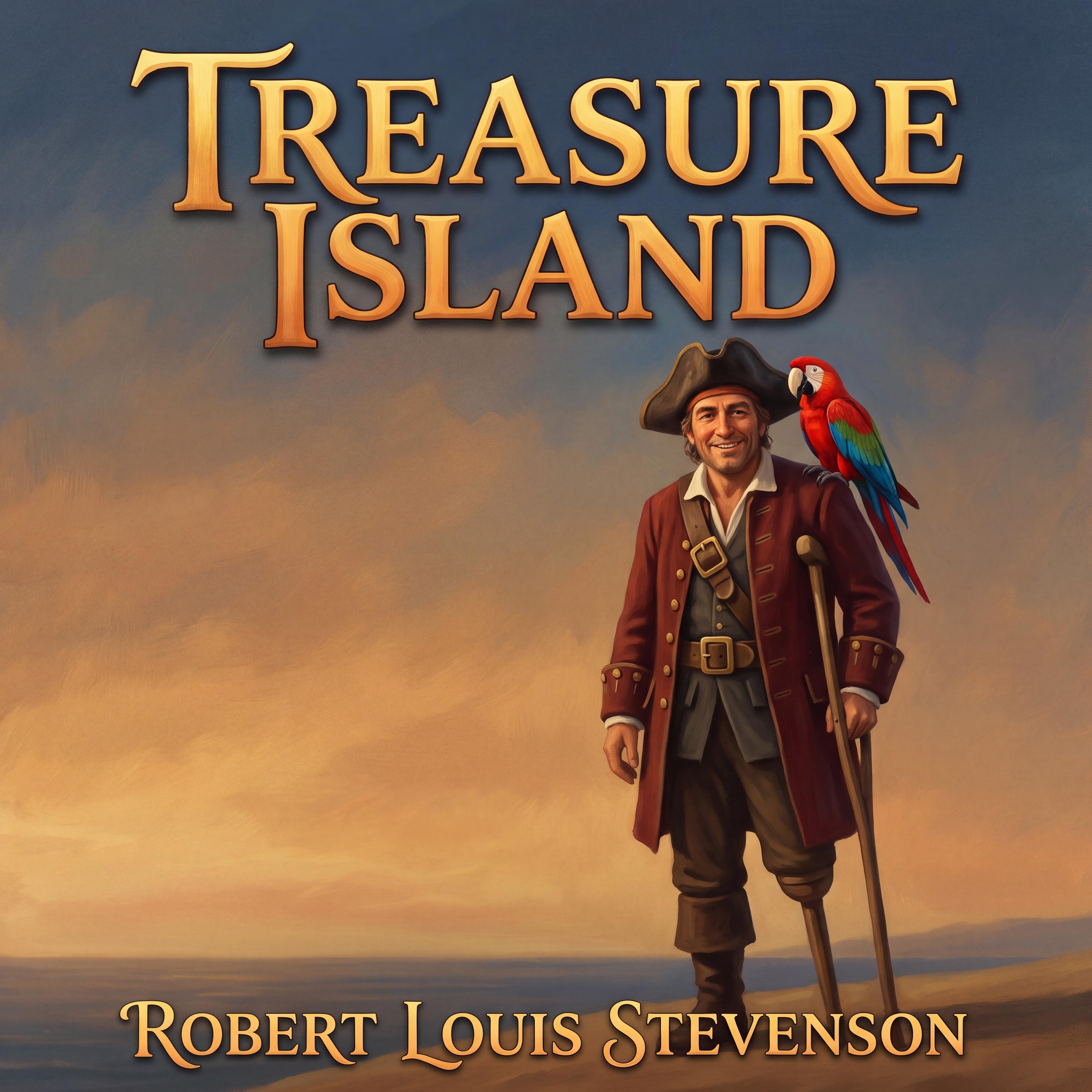
Treasure Island began with a map. In the summer of 1881, with bad weather keeping the family indoors at Braemar in Scotland, Robert Louis Stevenson used the idea of a secret map to amuse his twelve-year-old stepson, Lloyd Osbourne, and the story grew out of it under the working title The Sea Cook: A Story for Boys. It ran in the children's magazine Young Folks in seventeen weekly instalments, from 1 October 1881 to 28 January 1882, signed "Captain George North", and Cassell & Co. published it as a book on 14 November 1883. Much of how pirates are pictured today comes from it: the deserted island, the treasure map marked with an X, the one-legged seaman with a parrot on his shoulder. Jim Hawkins tells it, years later, at the request of the gentlemen who sailed with him, from the day an old sea-captain arrives at his parents' inn, the Admiral Benbow, to the day the Hispaniola sails home with Flint's gold. On the way there is a blind man tapping up a frosty road, a boy hiding in an apple barrel while the cook plots mutiny, a stockade under fire, a fight in the rigging, and a voice in the trees that the pirates take for a dead man's. It is a book of voices, and it needs a cast.
This production has 31 speaking parts, each on its own voice, and no voice is shared. Jim narrates and speaks his own part in the scenes, 1,572 lines across every chapter. Long John Silver has 298 lines in 16 chapters, Dr. Livesey 282, Captain Smollett 171, Squire Trelawney 86, Ben Gunn 65, Israel Hands 54 and Billy Bones 43. Then come the pirates, blind Pew, Black Dog, George Merry, Tom Morgan, Dick Johnson and Job Anderson, and on the other side Jim's mother, Supervisor Dance, Tom Redruth the gamekeeper and Abraham Gray, the one hand who comes over to the captain. How many character voices an audiobook needs explains why parts this size still get a voice. Even the parrot has one. Silver's bird, Captain Flint, cries "Pieces of eight!" from her cage in the galley in Chapter 10 and again in Chapter 27, in the dark of the blockhouse, where the scream gives Jim away to the sleeping pirates. Her namesake speaks only once. In Chapter 6, when Livesey and the squire open the oilskin packet, the notes on the back of the map, "Tall tree, Spy-glass shoulder" down to the initials "J.F.", are read in Flint's own voice.
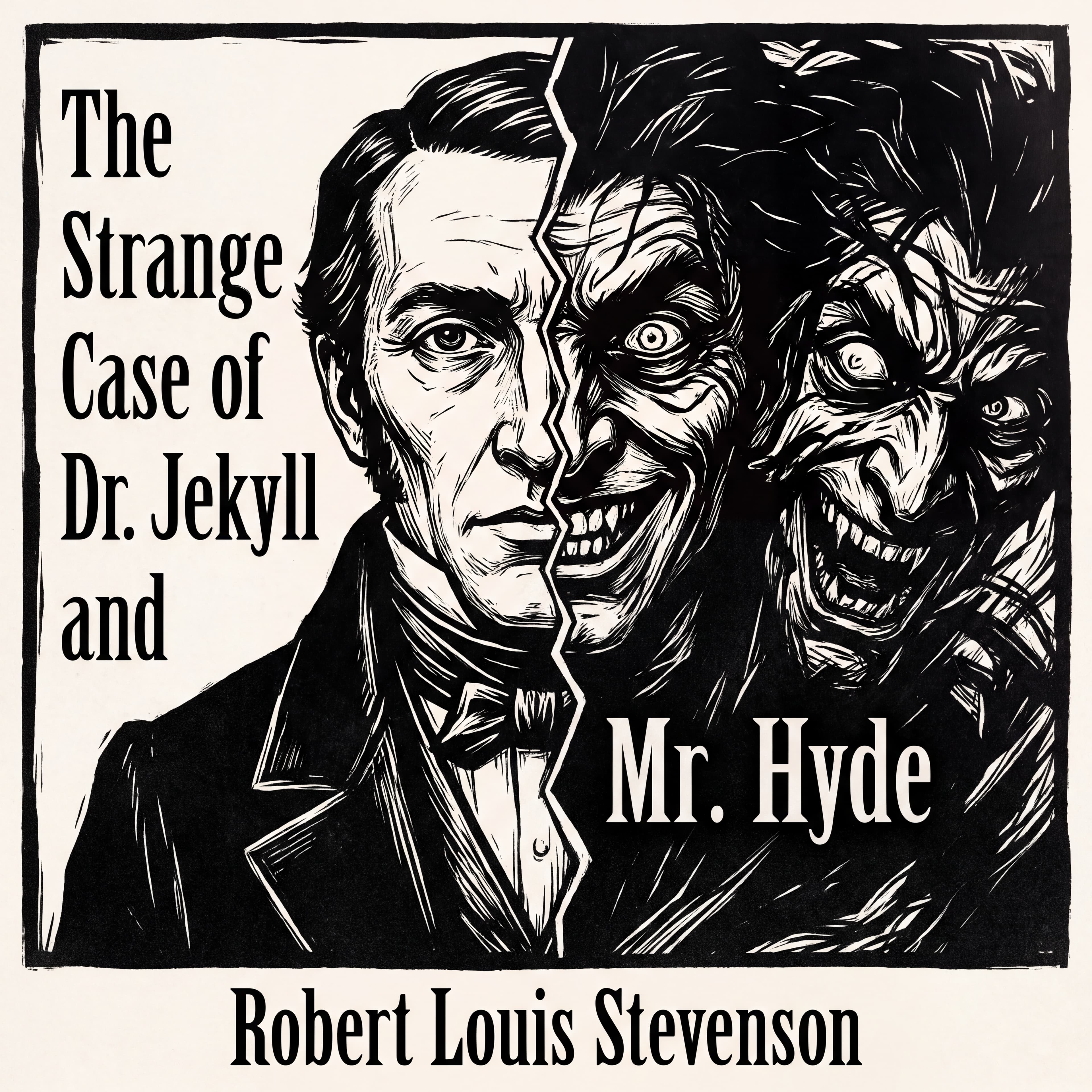
Stevenson hands the story to someone else for three chapters, and the production follows him. Part Four opens with "Narrative Continued by the Doctor", and from there Dr. Livesey narrates in his own voice: the abandoning of the ship, the overloaded jolly-boat's last trip under the ship's gun, and the first day's fighting at the stockade, 137 of his lines in those three chapters. Jim's voice still reads the chapter headings, and his theme comes in at the end of Chapter 18 on his own shout from outside the stockade, "Doctor! Squire! Captain! Hullo, Hunter, is that you?", before he takes the narrative back in Chapter 19. Our production of Strange Case of Dr Jekyll and Mr Hyde does the same with Lanyon's narrative and Jekyll's statement. The casting also lets a careful listener solve a mystery before the pirates do. In Chapter 32, "The Voice Among the Trees", a thin voice sings "Fifteen men on the dead man's chest" from the woods, then calls "Fetch aft the rum, Darby!", Flint's last words. George Merry is sure it is Flint's ghost. Silver says it is "someone that's flesh and blood". The voice is Ben Gunn's, the same one that told Jim his story in Chapter 15. The song itself passes through four voices: Billy Bones in Chapter 1, Silver at the capstan in Chapter 10, the pirates round their camp-fire in Chapter 23, and Ben Gunn among the trees.
The score is built on three themes. One belongs to Flint and his treasure. It enters in Chapter 1, where Billy Bones pays Jim a silver fourpenny a month to keep his "weather-eye open for a seafaring man with one leg", follows Bones's tattoo, the black spot and Pew's "cruel, and cold, and ugly" voice through the inn chapters, returns with Ben Gunn's account of the burial, with Silver's "The black spot! I thought so" and with the skeleton pointing the way, and closes on the last paragraph of the book, where the bar silver still lies where Flint buried it. One follows Silver's game. It is first heard in Chapter 7, as the squire's letter tells how he met Silver "by the merest accident", and runs through 13 chapters, from Jim's first sight of him at the Spy-glass to the voyage home in Chapter 34. The third is Jim's, from the opening line through his first smell of "tar and salt" at Bristol to "I've come aboard to take possession of this ship, Mr. Hands" in Chapter 25. A cue of hidden treachery runs under eleven chapters, among them the apple barrel, and the inn, the schooner, the stockade, the island interior and Ben Gunn's cave each have their own ambience. The sound design stays with the text, with more than 250 effects placed to the word. Pew's stick taps closer in Chapter 3, raps the bolted door in Chapter 4 and strikes the road in Chapter 5, until Dance's horses ride him down. Silver's crutch crosses the sanded floor of the Spy-glass, and in Chapter 14 it flies through the air and strikes Tom between the shoulders. A cannonball goes through the log-house roof and out through the floor. In Chapter 26 Jim's pistol clicks without firing, he reprimes it in the cross-trees, and Israel Hands's dirk pins his shoulder to the mast as both pistols go off. The characters breathe, laugh and gasp in their own voices too: Billy Bones snorts, Silver roars with laughter at the Spy-glass, and the book ends on Jim starting awake from the nightmare in which he still hears the parrot's "Pieces of eight!" Our children's and middle-grade production guide covers how much menace a book for young listeners can carry.
This is the complete novel, not an adaptation: all 34 chapters in order, in Stevenson's six parts, from "The Old Sea-dog at the Admiral Benbow" to "And Last", with opening and end credits. The only lines left out are two speech tags in Chapter 1 and a stray chapter numeral at the end of Chapter 2. The chapters run from 9m 07s ("The Jolly-boat's Last Trip") to 18m 01s ("In the Enemy's Camp"), 6h 53m in all. Robert Louis Stevenson died in 1894. The novel is in the public domain in the United States, the UK and the EU.
Every line, cue and effect in this production sits on a studio timeline, the same one an author gets for their own book. Upload a manuscript and Midsummerr casts, scores and mixes it in one click. Then Martin, our AI audio director, takes notes in plain words. If you want Silver to chuckle under a threat or the squire to gasp at the news, you say so, and Martin adds the reaction in the character's own voice without producing the chapter again. Midsummerr is the only audiobook platform with an AI audio director.
By the numbers
- Format: Full-cast dramatized audiobook, complete text
- Chapters: 36 (Stevenson's 34 chapters in six parts, plus opening and end credits)
- Runtime: 6h 53m
- Cast: Jim Hawkins (narrator), Long John Silver, Dr. Livesey (narrator of Part Four), Captain Smollett, Squire Trelawney, Ben Gunn, Israel Hands, Billy Bones, blind Pew, and 31 speaking parts in all
- Production: AI character voices, original music, and sound effects
- Price: Free to listen
Ready to try it on your own book?
Start with 5,000words free →FAQ
Is this audiobook AI-narrated?
Yes. Every voice in Treasure Island is AI-generated and produced by Midsummerr, with an original score and sound design. AI narration is disclosed as such on retail platforms that require it.
How long is the audiobook?
About 6h 53m across 36 chapters: Stevenson's 34 chapters, plus opening and end credits. The chapters run from 9m 07s (Chapter 17, "The Jolly-boat's Last Trip") to 18m 01s (Chapter 28, "In the Enemy's Camp").
Who narrates it?
Jim Hawkins, as in the book. The same voice tells the story and speaks Jim's lines in the scenes. For Chapters 16 to 18, which Stevenson gives to the doctor, Dr. Livesey narrates in his own voice, and Jim takes the story back in Chapter 19. Every other character has a voice of their own.
Is it suitable for children?
Stevenson wrote it for a children's magazine, under the working title The Sea Cook: A Story for Boys. It is still a book about pirates: men are shot and stabbed, Pew is ridden down by horses, and the pirates drink and threaten. The production keeps all of it, as the text does.
Is this the full book or an adaptation?
The full book. The production follows the complete text in order, with Jim narrating, Dr. Livesey narrating his three chapters, and a separate voice for every speaking character. The only lines left out are two speech tags in Chapter 1 and a stray chapter numeral.
Where can I listen?
Listen free at midsummerr.com/listen/treasure-island-robert-louis-stevenson.