About this production
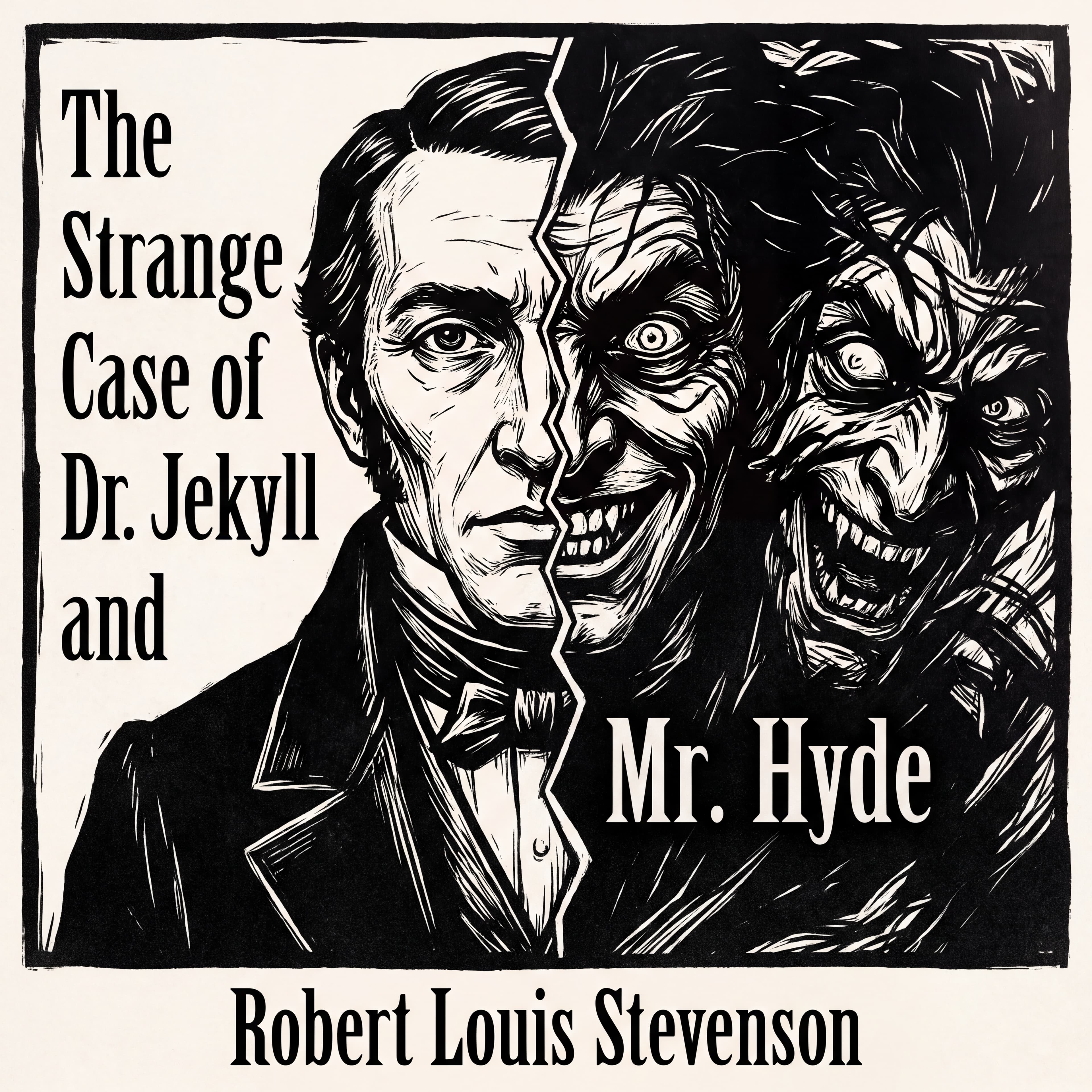
Strange Case of Dr Jekyll and Mr Hyde came out in January 1886, from Longmans, Green & Co. in London and Charles Scribner's Sons in New York, and sold in Britain as a one-shilling paperback. Stevenson wrote it in Bournemouth. It is a short book with an unusual shape. For eight chapters it is a mystery seen through Mr. Utterson, a lawyer who holds Dr. Jekyll's will and cannot understand why it leaves everything to a man called Edward Hyde. He hears Enfield's story of the door, waits for Hyde in the street, follows the Carew murder and a letter signed by Hyde, and ends at Jekyll's cabinet door with an axe. Then the book hands over to two documents: Dr. Lanyon's narrative of a midnight visitor, and Henry Jekyll's full statement of the case. It is told by a narrator who follows Utterson, then by Lanyon and Jekyll in their own words, and its central character lives in two bodies, so it needs a cast more than it needs a reader.
This production has 13 speaking parts, each on its own voice. The narrator carries 393 lines, and Utterson has 201 across eight chapters. Jekyll has 155, Poole the butler 77, Lanyon 69 and Enfield 36. Hyde has only 28, in three chapters, and he is cast apart from Jekyll: a separate, younger voice, which is how Jekyll's own statement describes him, "so much smaller, slighter and younger than Henry Jekyll." That choice pays off in "The Last Night". Poole brings Utterson to the cabinet door and announces him, and a voice inside answers, "Tell him I cannot see anyone." Back in the kitchen Poole asks, "Was that my master's voice?" and Utterson can only say, "It seems much changed." A single narrator has to ask you to take Poole's word for it. Here you have heard the voice through the door and can answer for yourself. The same voice begs "Utterson, for God's sake, have mercy!" and screeches as the axe hits the red baize door. Around the leads are the small parts: Mr. Guest the clerk, who compares the handwriting, Inspector Newcomen, Hyde's housekeeper, the cook, Jekyll's door servant and the newsboys crying the murder in the street. How many character voices an audiobook needs explains why parts this small still get a voice.
The documents are read by the men who wrote them. Jekyll's note to the chemists, which Poole shows Utterson, and his last letter, found in the cabinet, are in Jekyll's voice. "Dr. Lanyon's Narrative" is told by Lanyon. Jekyll's letter asking him to fetch the drawer is read by Jekyll, and the midnight visitor who arrives for it speaks as Hyde until he drinks. "Henry Jekyll's Full Statement of the Case" is the longest chapter at 48m 20s, and Jekyll tells all of it. Hyde never speaks in the statement. His crimes come to you in Jekyll's voice, which is the point of the chapter. Bram Stoker's Dracula, written eleven years later, is built from diaries and letters in the same way, and our production of it gives each one to its writer too.
The score is built around the three men. A patient, searching theme for Utterson opens Chapter 1 on Stevenson's description of the lawyer and follows his inquiry through six chapters. Hyde's theme enters in Chapter 1 on Enfield's words "It was a man of the name of Hyde", the first time the name is spoken, and returns in five more chapters: as his footsteps come down the street in Chapter 2, as the maid at her window recognises him in the lane before the Carew murder, and through to the statement. Jekyll's theme is first heard in Chapter 3, when his face "grew pale to the very lips" at Hyde's name, and returns in four more chapters, among them his letters to Utterson and the first line of his statement. An uneasy, gaslit score runs under eight chapters. The sound design stays with the text. Fog-bound London is under seven chapters. The church bells strike six while Utterson broods over the will and twelve before the knock at Lanyon's door. The cane falls in the Carew murder and again when Jekyll describes it. The axe breaks the cabinet door, the draught effervesces in Lanyon's consulting room, and Jekyll grinds the key under his heel. Our horror and gothic production guide covers how a score like this keeps dread under dialogue without crowding it.
This is the complete story, not an adaptation: all ten chapters in order, from "Story of the Door" to "Henry Jekyll's Full Statement of the Case", with opening and end credits. The only lines cut are the speech tags in Chapter 1, where Enfield and Utterson trade the story of the door back and forth and the two voices carry it without "said Mr. Utterson". Cutting dialogue tags in a full-cast audiobook explains when that works. The chapters run from 3m 51s ("Incident at the Window") to 48m 20s, so the whole book fits into one evening. Robert Louis Stevenson died in 1894 and the text is in the public domain worldwide, so the production is free to listen to in every territory.
Every line, cue and effect in this production sits on a studio timeline, the same one an author gets for their own book. Upload a manuscript and Midsummerr casts, scores and mixes it in one click. Then Martin, our AI audio director, takes notes in plain words. If you would have cast Hyde rougher or Utterson warmer, you say so, and you audition a new voice before any audio you have changes. Midsummerr is the only audiobook platform with an AI audio director.
By the numbers
- Format: Full-cast dramatized audiobook, complete text
- Chapters: 12 (Stevenson's ten chapters, plus opening and end credits)
- Runtime: 2h 53m
- Cast: Mr. Utterson, Dr. Jekyll, Mr. Hyde, Poole, Dr. Lanyon, Mr. Enfield, Mr. Guest, Inspector Newcomen, and 13 speaking parts in all, including the narrator
- Production: AI character voices, original music, and sound effects
- Price: Free to listen
Ready to try it on your own book?
Start with 5,000words free →FAQ
Is this audiobook AI-narrated?
Yes. Every voice in The Strange Case of Dr. Jekyll and Mr. Hyde is AI-generated and produced by Midsummerr, with an original score and sound design. AI narration is disclosed as such on retail platforms that require it.
How long is the audiobook?
About 2h 53m across 12 chapters: Stevenson's ten chapters, plus opening and end credits. The chapters run from 3m 51s (Chapter 7, "Incident at the Window") to 48m 20s (Chapter 10, "Henry Jekyll's Full Statement of the Case").
Are Jekyll and Hyde played by the same voice?
No. They are two voices, as the book describes two bodies: Hyde is younger and smaller than Jekyll. Hyde speaks in Chapters 2, 8 and 9, and Jekyll narrates his own statement in Chapter 10.
Is this the full book or an adaptation?
The full book. The production follows the complete text in order, with a narrator, a separate voice for every speaking character, and the last two chapters read by Lanyon and Jekyll. The only lines cut are the speech tags in Chapter 1.
Is Dr. Jekyll and Mr. Hyde in the public domain?
Yes. It was published in 1886 and Robert Louis Stevenson died in 1894, so the text is in the public domain worldwide. The full text is on Project Gutenberg.
Where can I listen?
Listen free at midsummerr.com/listen/strange-case-of-dr-jekyll-and-mr-hyde-robert-louis-stevenson.