About this production
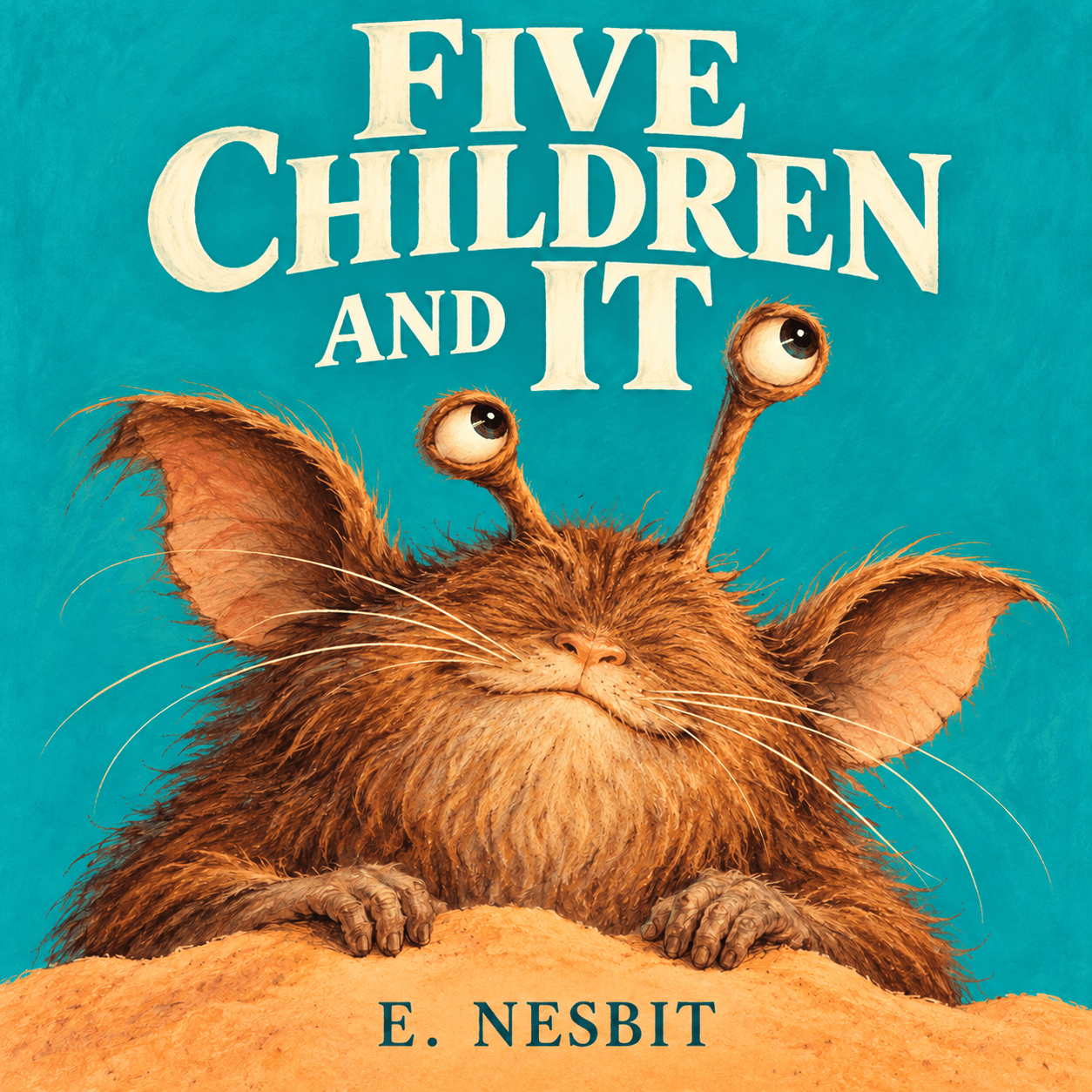
E. Nesbit's Five Children and It first ran in The Strand Magazine from April to December 1902 as "The Psammead, or the Gifts", and T. Fisher Unwin published it as a novel the same year. Cyril, Anthea, Robert, Jane and the baby they call the Lamb are sent from London to a white house in Kent, and in a gravel pit nearby they dig up the Psammead: a sand-fairy thousands of years old, with a snail's eyes on stalks, a bat's ears and a very short temper. It grants them one wish a day, and every wish lasts until sunset. Nearly every chapter is one wish going wrong: they wish to be beautiful and their own servants shut the door on them, wish for gold and find that hardly anyone in Rochester will take it, wish for wings and are stranded on a church tower when the sun goes down. It is a book of five siblings arguing, and of a creature with the driest lines in it, so it needs a cast more than it needs a reader.
This production has 52 speaking parts: the narrator and 51 characters, each with a voice of their own. Anthea has the most lines (294), with Robert (257) and Cyril (255) close behind and Jane on 144. The Psammead speaks in nine of the eleven chapters, 147 lines, most of them cross, and Martha, the servant who has to live with the consequences, has 60. The Lamb has two voices: a baby in four chapters, and the young man he turns into in Chapter 9, "Grown Up", when Cyril, losing patience with him, wishes he would grow up. Around them is the long tail that a single narrator usually folds into one voice: the vicar and his wife, whose church tower the children are stuck on; the gamekeeper who climbs the tower stairs to let them out; the police inspector who wants to know where so many guineas came from; Lady Chittenden and her coachman and groom; the plum-grower and his wife; Sir Wulfric de Talbot, questioning Robert in the besiegers' camp; and Golden Eagle in Chapter 10. How many character voices an audiobook needs explains why parts this small each get a voice.
The score is built around the wishes. A wish theme, dry and comic with a faint edge of menace, comes back in eight of the eleven chapters as the children go down to the gravel pit for the day's wish, and a swell of whirling sand marks the moment each wish takes hold. When the sun sets and the magic wears off, the sound of it fading into the air marks the sunset in seven chapters, and in five of them a theme of relief follows as ordinary life comes back. A warmer theme for the siblings themselves opens Chapters 3, 6 and 8. The sound design stays with the text: a cascade of gold coins into the pit and pockets stuffed with guineas; great feathered wings unfolding and rustling out of the plum trees, then wind and rooks around the church tower; rusty bolts grinding as the tower door is opened; a medieval siege camp, trumpet blasts, the drawbridge crashing down and a battering ram on the gate when the house becomes a castle; and the steam organ of Benenhurst Fair, where Robert is shown off as a giant. Sound design in audiobooks covers how a score and effects like these sit under dialogue without crowding it.
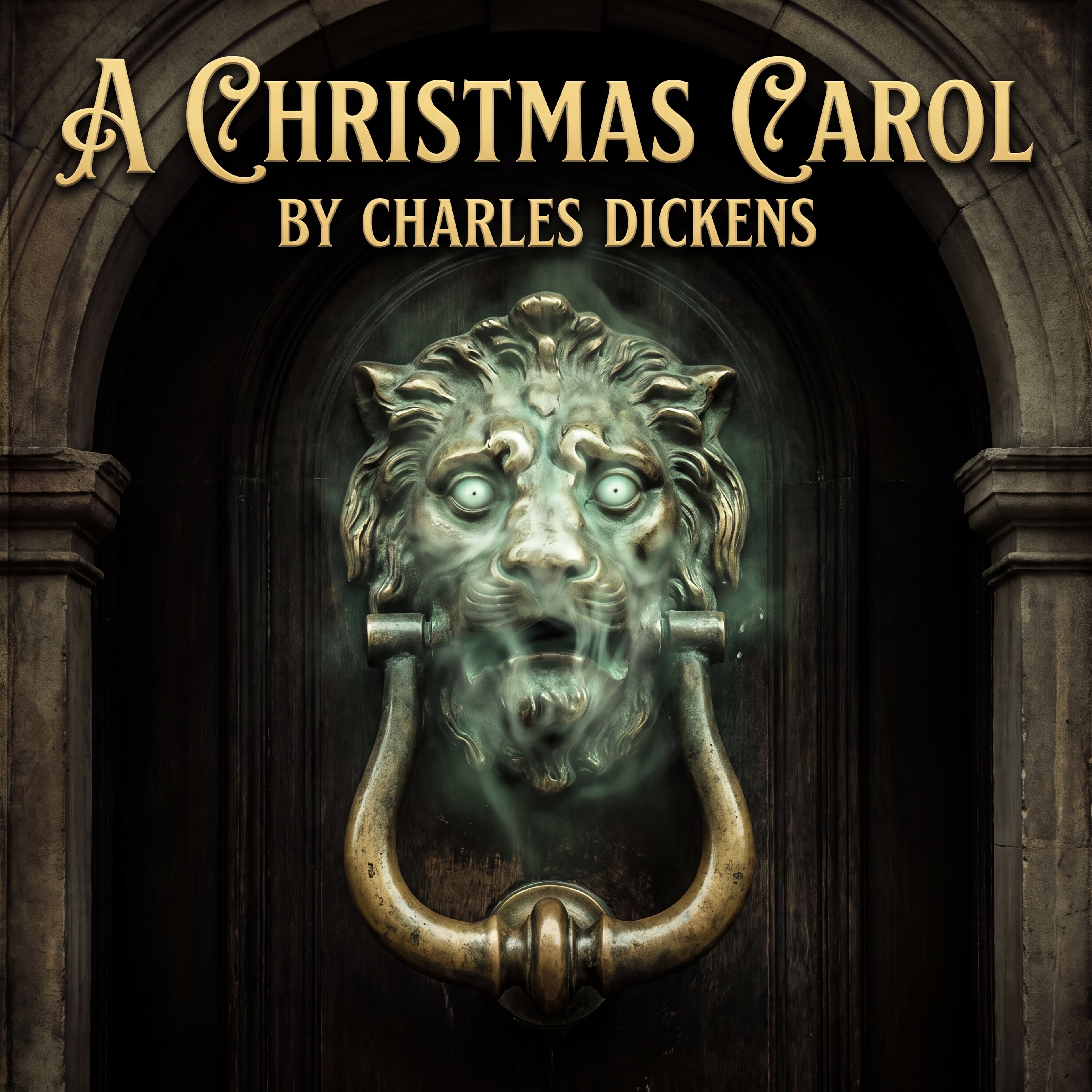
This is the complete text, not an adaptation: all eleven chapters in order, from "Beautiful as the Day" to "The Last Wish", with opening and end credits. Nearly every chapter is one wish from morning to sunset, so the book works as eleven bedtimes, running from 19m 30s ("No Wings") to 39m 46s ("Being Wanted"). Nesbit wrote two sequels with the same children, The Phoenix and the Carpet (1904) and The Story of the Amulet (1906). Our children's and YA audiobook production guide explains how a book for young listeners is paced and cast, and our fantasy production guide covers how a magical creature is given a voice. Its nearest companion in our catalogue for family listening is A Christmas Carol. E. Nesbit died in 1924 and the text is in the public domain worldwide, so the production is free to listen to in every territory.
Every line, cue and effect in this production sits on a studio timeline, the same one an author gets for their own book. Upload a manuscript and Midsummerr casts, scores and mixes it in one click; then Martin, our AI audio director, takes notes in plain words, so "make the Psammead even crosser when they wake it" is something you type, not something you re-record. Midsummerr is the only audiobook platform with an AI audio director, and changing one line of your audiobook shows how a note becomes a new take.
By the numbers
- Format: Full-cast dramatized audiobook, unabridged
- Chapters: 13 (all 11 of Nesbit's chapters, plus opening and end credits)
- Runtime: 5h 36m
- Cast: Cyril, Anthea, Robert, Jane, the Lamb, the Psammead, Martha, Mother, Sir Wulfric de Talbot, Lady Chittenden, and 52 speaking parts in all, including the narrator
- Production: AI character voices, original music, and sound effects
- Price: Free to listen
Ready to try it on your own book?
Start with 5,000words free →FAQ
Is this audiobook AI-narrated?
Yes. Every voice in Five Children and It is AI-generated and produced by Midsummerr, with an original score and sound design. AI narration is disclosed as such on retail platforms that require it.
How long is the audiobook?
About 5h 36m across 13 chapters: Nesbit's eleven, plus opening and end credits. The chapters run from 19m 30s (Chapter 5, "No Wings") to 39m 46s (Chapter 3, "Being Wanted").
Is this the full book or an adaptation?
The full book. The production follows the complete text of Five Children and It in order, from the move to the white house to the last wish, with a narrator and a separate voice for every speaking character.
Is it suitable for children?
Yes. Nesbit wrote it for children, and it is funny, fast and kind. It was also written in 1902, and two chapters show it: the travellers who try to take the Lamb in Chapter 3 and the "Red Indians" of Chapter 10 are period stereotypes, kept as Nesbit wrote them because this is the unabridged text. Families listening with younger children may want to talk those two chapters through.
Is Five Children and It in the public domain?
Yes. It was published in 1902 and E. Nesbit died in 1924, so the text is in the public domain worldwide. The full text is on Project Gutenberg.
Where can I listen?
Listen free at midsummerr.com/listen/five-children-and-it-e-nesbit.