About this production
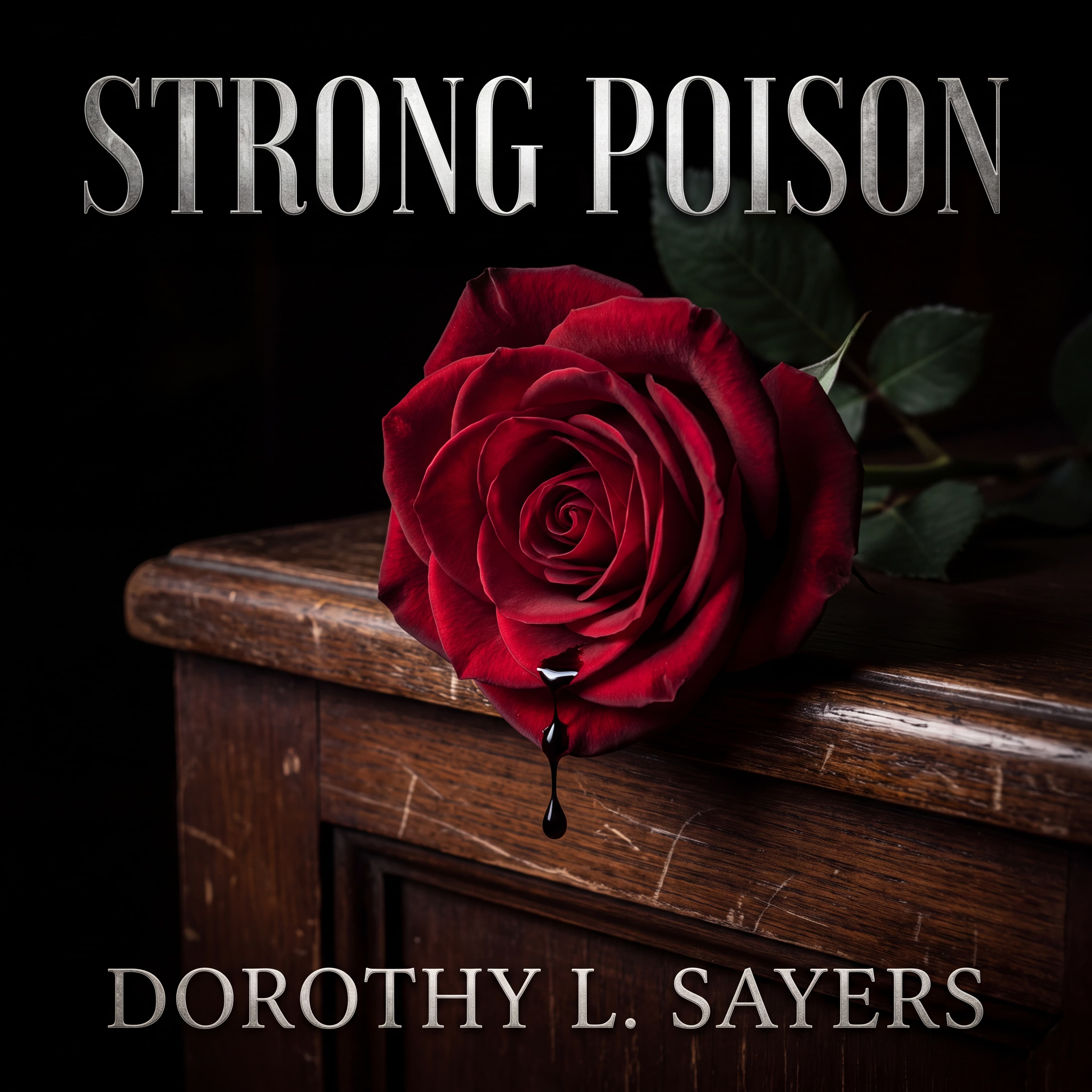
"There were crimson roses on the bench; they looked like splashes of blood." Strong Poison opens not on its detective but on a judge, and it stays with him for the better part of an hour: Chapters I and II, at 39m 42s and 19m 54s in this production, are the summing-up in the trial of Harriet Vane for the murder of Philip Boyes. The summing-up is scrupulous in form and devastating in effect. Sayers lets you hear the case build one measured sentence at a time while, at the edge of the room, the Hon. Freddy Arbuthnot mutters and Lord Peter Wimsey sits and listens to a woman he has just decided to marry being described to a jury. Read in one voice, that first hour is a long stretch of a single register. Cast, it becomes what Sayers actually wrote: a courtroom, with a bench, a gallery and a prisoner in it, and a detective who has no standing there and can do nothing but watch.
The investigation, when it comes, is conducted almost entirely by impersonation, and that is the reason this novel rewards a dramatized treatment more than most of its Golden Age neighbours. Wimsey barely detects; he delegates, and everyone he delegates to has to become someone else. Miss Climpson, who held out against a conviction on that jury in Chapter III, travels north and befriends a sickroom nurse through a shared enthusiasm for spiritualism, then stages a séance she does not believe in, across Chapters XVI to XIX. Miss Murchison takes a typist's desk in a solicitor's office and, in Chapter XIII (31m 08s), after an evening of Bach in Wimsey's flat, is taught to pick a lock by a reformed burglar called Blindfold Bill. Bunter spends Chapter VIII, at 41m 58s the longest in the production, taking tea with a cook and a parlourmaid and being charming on purpose. Wimsey himself gets into Holloway Gaol in Chapter IV (24m 22s), proposes marriage across a prison table, on his first visit, to a woman he has only ever seen from the gallery, and is, in the politest possible way, not accepted. On the page an impersonation is a voice describing a voice. In a full cast, Miss Climpson's medium is audibly a devout, chattering spinster doing an impression she is ashamed of being good at, which is the comedy and the moral weight of the book's middle at the same moment. How many character voices an audiobook needs covers how a cast this size gets sorted; the short version is that Strong Poison needs its minor players to sound like people with lives, because the plot runs through their kitchens and sickrooms.
Sayers gives up the who early. The suspect list is short, and by the time Wimsey reads a will in Chapter XI the reader is meant to know where he is looking. The novel's puzzle is the how: a dinner at which every dish was shared, a cup of coffee, a ten-minute gap on the way home, a white powder stirred into a glass of water in a pub that turns out, in Chapter XVI (36m 03s), to be bicarbonate of soda. We will say no more about the mechanism than the book's own first two chapters do. What a cast adds to the last hour, Chapter XX at 41m 44s and the confrontation of Chapter XXII at 19m 07s, is that you hear the mechanism click shut in real time, in a room, with a third voice waiting behind a door. Our mystery and detective audiobook production guide goes into why the reveal is the scene a dramatized edition has to get right; this one is a two-hander until it suddenly is not.
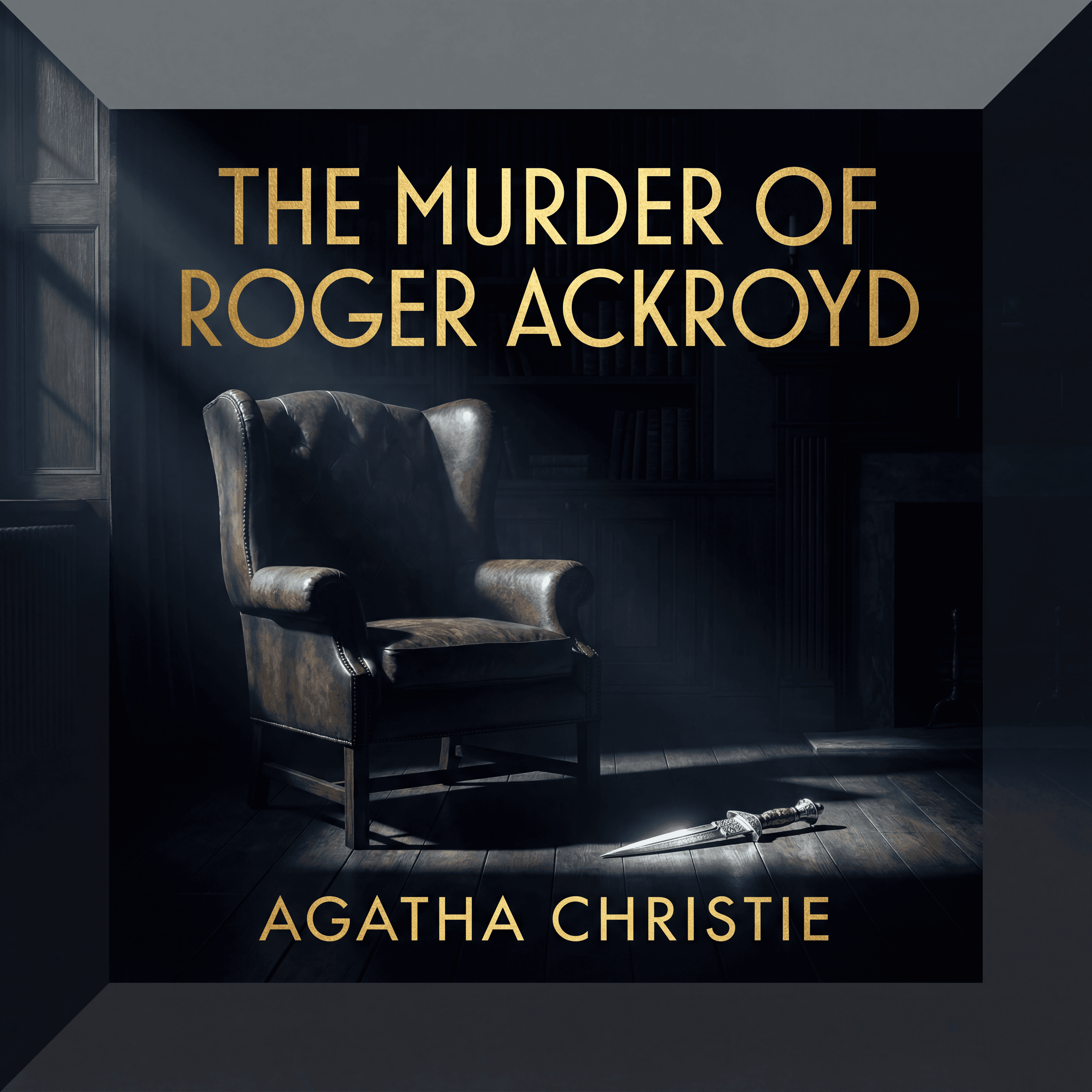
The reason the book is still read, though, is not the poison. Harriet Vane is a mystery novelist on trial for a murder committed the way one of her own plots would commit it, and the one scene in which she comes fully alive before the verdict is Chapter VII (14m 55s), where Wimsey visits her in prison to talk through a hypothetical murder and she cannot help being interested. She turns him down in Chapter IV and Sayers ends the book with the question still open; the answer took three more novels, Have His Carcase, Gaudy Night and Busman's Honeymoon. A listener who starts here is starting a series, which is the point at which cast continuity stops being a production detail and becomes the thing a listener notices first. Our production of The Murder of Roger Ackroyd, published four years earlier, is the natural companion piece: a Golden Age puzzle built on a narrator you cannot quite trust, where this one is built on a defendant you are asked to.
The production runs 8h 53m and contains all 23 chapters of the novel, unabridged and in order, from the crimson roses on the bench to the morning the Crown offers no evidence. It is free to listen to.
The novel is in the public domain in the United States, but Dorothy L. Sayers's work is still under copyright in the United Kingdom and the EU. This title is available to listen everywhere except those territories.
By the numbers
- Format: Full-cast dramatized audiobook
- Chapters: 25 (all 23 chapters of the novel, plus opening and end credits)
- Runtime: 8h 53m
- Production: AI character voices, original music, and sound effects
- Price: Free to listen
Ready to try it on your own book?
Start your first chapter free →FAQ
Is this audiobook AI-narrated?
Yes. Every voice in Strong Poison is AI-generated and produced by Midsummerr, with an original score and sound design. AI narration is disclosed as such on retail platforms that require it.
How long is the audiobook?
About 8h 53m across 25 chapters.
Is the whole novel included, or an abridgement?
The whole novel. All 23 chapters are present in order, from the judge's summing-up to Harriet Vane's acquittal, nothing abridged and nothing bundled together.
Why does it list 25 chapters when Strong Poison has 23?
The extra two are production chapters rather than story: opening credits and end credits. The novel itself is complete at 23.
Do I need to have read the earlier Lord Peter Wimsey novels?
No. Strong Poison is the first novel in which Harriet Vane appears and the one many readers start with. The earlier books are referred to in passing, never relied on.
Where can I listen?
Listen free at midsummerr.com/listen/strong-poison-dorothy-l-sayers.