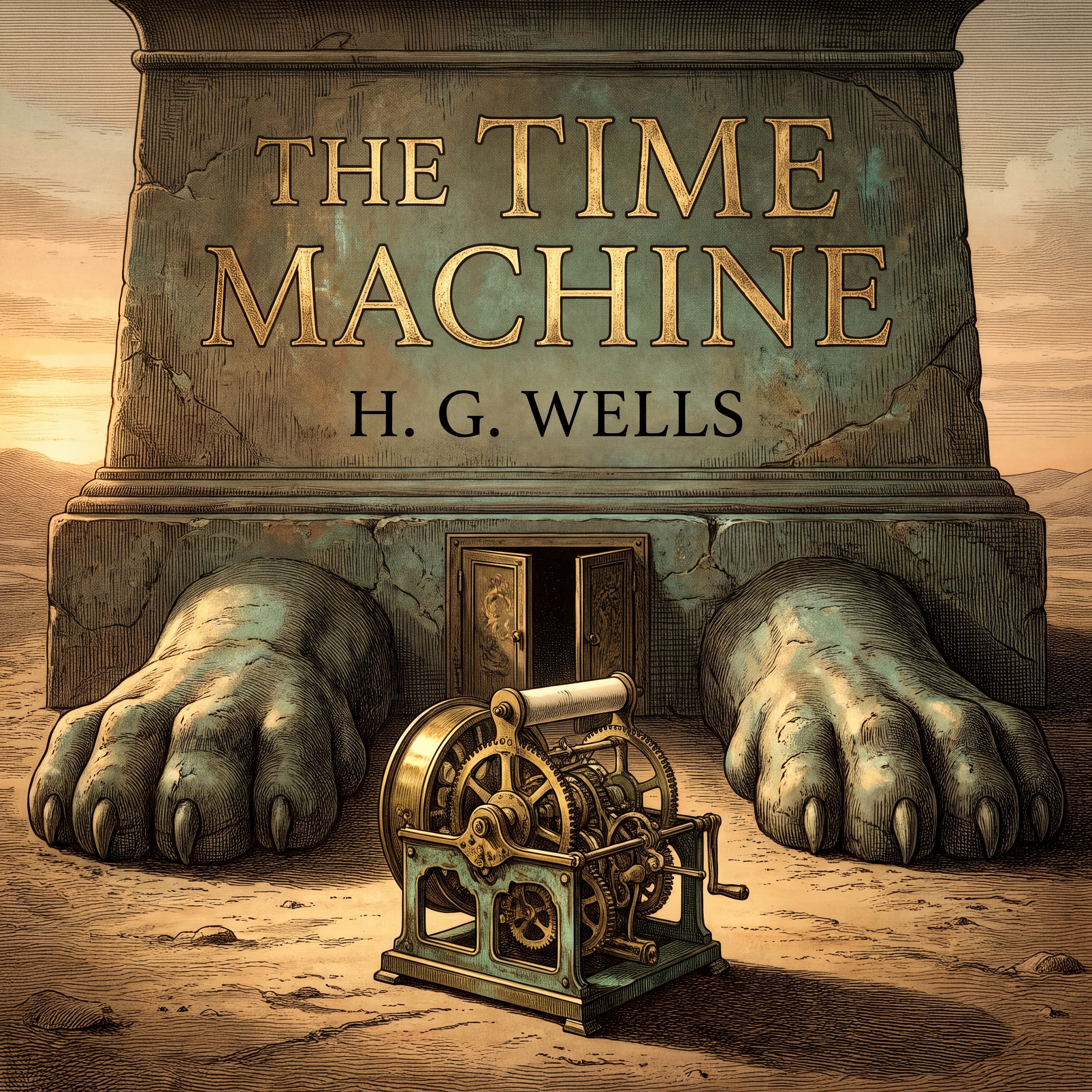
The Time Machine
by H. G. Wells
The Time Machine
by H. G. Wells
In Victorian England, a brilliant scientist known as the Time Traveller invents a machine capable of moving through the fourth dimension. He journeys to the year 802,701 AD, where he initially believes he has found a peaceful, communist utopia inhabited by the delicate Eloi. However, he soon discovers a dark secret: humanity has diverged into two species, with the predatory, subterranean Morlocks raising the Eloi like cattle for food. The central conflict involves the Time Traveller's desperate struggle to recover his stolen machine from the Morlocks while protecting his Eloi friend, Weena. His journey takes him from the ruins of a decadent future to the literal end of the world, where he witnesses the death of the sun. The story is framed by a skeptical narrator who witnesses the Traveller's final, mysterious disappearance. The tone shifts from scientific curiosity to gothic horror and finally to a profound, cosmic melancholy. Ultimately, the book serves as a cautionary tale about social inequality and the eventual decline of the human race.